The enterprise challenge
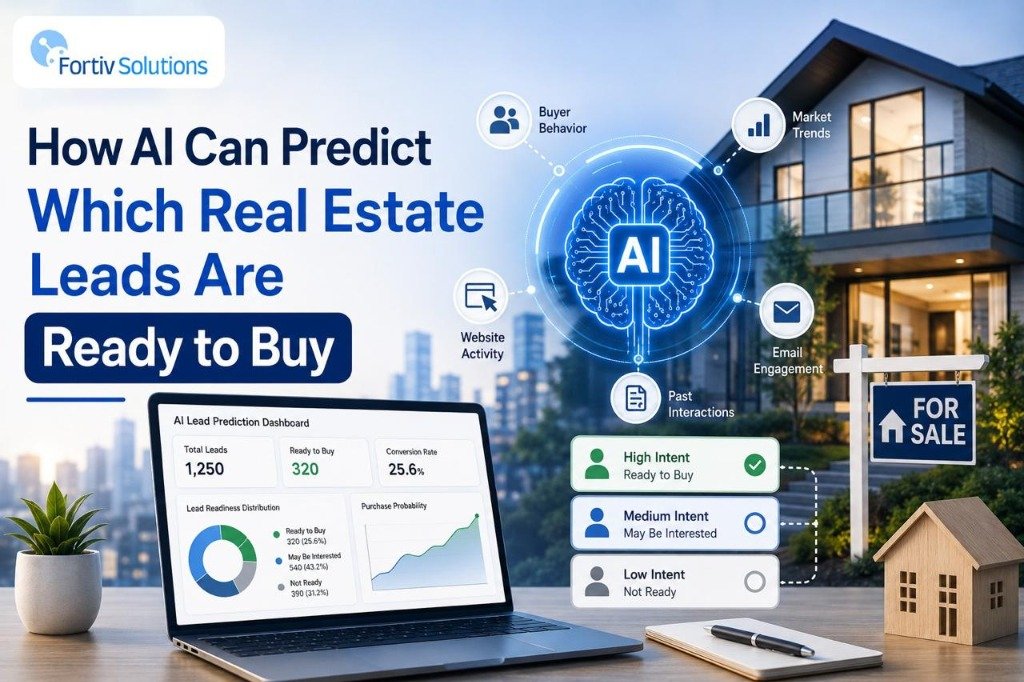
Why Lead Intent Matters in Real Estate: Buying property is rarely an instant decision. A potential buyer may first search for properties online, compare locations, check prices, speak with family members, request brochures, and eventually schedule a site visit. This creates a significant gap between the first inquiry and the final transaction. For a real estate sales team, the difficult part is knowing where each lead stands in that journey. A person who downloaded a brochure once should not necessarily receive the same level of attention as someone who has visited multiple property pages, checked pricing information several times, responded to WhatsApp messages, and requested a site visit. Traditional lead management systems often record these activities, but they don't always turn the information into a clear prediction. AI can help bridge that gap.
Industry governance context
How This Can Help Mumbai Real Estate Businesses: Mumbai is an extremely competitive real estate market, with buyers considering factors such as location, connectivity, property configuration, amenities, budget, developer reputation, and future infrastructure. This makes lead qualification particularly important. A real estate company may receive enquiries from buyers looking for luxury apartments in South Mumbai, families searching for homes in the suburbs, investors interested in upcoming developments, or customers comparing multiple projects. Their buying journeys can be very different. With AI Predictive Analytics for Real Estate in Mumbai, businesses can potentially identify patterns within these different customer journeys and create more informed sales priorities.
How AI Predicts Real Estate Buying Intent: AI predictive analytics works by analyzing different signals associated with previous leads and comparing them with the behavior of current prospects. Understanding Lead Behavior: Imagine that a prospective buyer visits a Mumbai residential project page several times over two weeks. They view the available configurations, check the location, download the project brochure, enquire about pricing, and later request a callback. Individually, each action may not reveal much. Together, however, these activities can indicate increasing purchase intent. An AI-powered predictive system can analyze these behavioral patterns alongside historical conversion data to determine whether similar leads have previously resulted in property sales. Over time, the system becomes better at identifying patterns associated with high-intent prospects.
Combining Multiple Data Signals: The strength of predictive analytics comes from looking beyond a single interaction. Depending on the system and available data, AI can analyze factors such as website engagement, enquiry history, property preferences, response behavior, source of the lead, interactions with sales representatives, site-visit activity, and previous communication. For example, a lead generated from a property portal may initially appear similar to another lead generated through a paid campaign. However, their subsequent behavior could be completely different. One may respond immediately to the sales team and request pricing information, while the other may stop engaging after submitting the enquiry form. Predictive models can use these differences to estimate the likelihood of conversion.
AI Lead Scoring for Real Estate Sales Teams: One of the practical applications of predictive analytics is AI-powered lead scoring. Instead of manually deciding which leads deserve immediate attention, a predictive system can assign a probability or score based on the lead's characteristics and behavior. From Traditional Lead Scoring to Predictive Lead Scoring: Traditional lead scoring usually depends on predefined rules. For example, a company might assign points when someone downloads a brochure, requests a callback, or visits a particular page. Predictive lead scoring takes a different approach. It learns from historical data to discover which combinations of signals are actually associated with successful conversions. This distinction is important. A brochure download by itself may not indicate strong buying intent. But if leads who download a brochure and subsequently request pricing information, respond to calls, and schedule site visits have historically converted at a higher rate, the model can recognize that pattern. This allows sales teams to focus more attention on leads showing behavior similar to previously successful customers.
Predicting Which Leads Need Immediate Attention: Suppose a developer receives 500 enquiries for a new project. The sales team may not have enough time to personally follow up with every prospect with the same level of urgency. A predictive model can help identify leads that display stronger conversion signals. Sales representatives can then prioritize those conversations while maintaining appropriate follow-up processes for lower-intent prospects. This does not mean that AI decides which customer will buy. Instead, it gives the sales team an additional data-driven signal to support their decision-making.
AI Can Also Predict When a Lead May Be Ready: Buying intent isn't always binary. A prospect may not be ready today but could become highly interested after a few weeks. Predictive analytics can help businesses understand these changes by continuously analyzing new interactions. Identifying Changes in Buyer Behavior: Consider a prospect who initially viewed a project only once. Two weeks later, they return to the website, compare apartment configurations, interact with a chatbot, request a floor plan, and ask about financing. The combination of these actions could represent an increase in purchase intent. A predictive system can flag such behavioral changes so that the sales team knows the prospect may deserve another conversation. This is particularly useful for real estate companies dealing with long sales cycles.
Predictive Analytics Can Improve Sales Follow-Ups: A major problem in real estate sales isn't always a lack of leads. It is often inconsistent follow-up. Sales representatives may spend too much time chasing cold leads while highly interested prospects receive delayed responses. AI can help improve this process by identifying leads that require greater attention. When predictive analytics is connected with CRM and lead management workflows, businesses can potentially use lead scores and behavioral signals to support more timely follow-ups. For a company working with hundreds or thousands of enquiries, this can make the sales process more structured and measurable.
The Role of Historical Data: Predictive analytics is only as useful as the data behind it. A real estate company needs reliable historical information about its leads, interactions, sales outcomes, and customer journeys. Learning From Previous Conversions: Suppose a developer has records of several thousand past enquiries. Among those records, some leads eventually purchased properties while others did not. AI can analyze these historical outcomes and look for recurring characteristics and behaviors. Over time, the model may discover that certain combinations of actions, lead sources, property preferences, and engagement patterns are associated with a greater probability of conversion. The model can then use those learned patterns when evaluating new leads. This is one reason organizations should treat CRM data as more than just a contact database. Clean and meaningful historical data can become a valuable business asset.
AI Doesn't Replace Real Estate Salespeople: There is a common misconception that AI predictive analytics is designed to replace sales teams. In reality, its greater value is often in helping sales professionals make better decisions. A salesperson understands conversations, customer concerns, local market conditions, and personal circumstances that may not be completely visible in structured data. AI provides another layer of intelligence. The combination of human experience and data-driven predictions can give real estate businesses a stronger approach to lead qualification.
How Fortiv Solutions Approaches AI for Real Estate: For businesses exploring AI adoption, the objective should not simply be to add another AI feature to an existing system. The technology should solve a specific business problem. At Fortiv Solutions, AI-driven solutions can be designed around real estate workflows, including lead management, customer engagement, predictive analytics, automation, and sales processes. The real opportunity lies in connecting data from different stages of the customer journey and turning that information into actionable intelligence. For a Mumbai real estate business, this could mean creating a system that helps the sales team understand which leads are showing stronger buying signals, which prospects may need further nurturing, and where follow-up efforts could potentially have the greatest impact.
What Real Estate Companies Should Consider Before Implementing Predictive Analytics: Predictive analytics isn't a magic solution that guarantees sales. Businesses need the right data, clearly defined conversion goals, appropriate technology, and processes for monitoring model performance. Data privacy also needs to be considered carefully, particularly when customer information and behavioral data are involved. Companies should also avoid treating an AI prediction as an unquestionable decision. A predictive score should support human judgment rather than replace it. The best implementations are usually those where AI becomes part of the existing sales workflow instead of operating separately from it.
The Future of AI-Powered Lead Qualification in Real Estate: Real estate sales are becoming increasingly data-driven. As buyers interact with properties through websites, mobile devices, messaging platforms, CRMs, and digital advertising channels, businesses are collecting more behavioral information than ever before. The next step is turning that information into useful predictions. AI Predictive Analytics for Real Estate in Mumbai can help businesses move from simply collecting leads to understanding lead behavior and purchase intent. Instead of asking only, 'How many leads did we generate this month?', real estate companies can begin asking more meaningful questions: Which leads are becoming more engaged? Which behaviors are associated with conversions? Which prospects may require immediate attention? And where should the sales team spend its time? That shift—from lead volume to lead intelligence—could become an important competitive advantage for real estate businesses operating in Mumbai's highly competitive property market.