

AI Agent Development
AI agent development for tasks that span your enterprise systems.
AI agent development for enterprises: autonomous AI agents that reason, plan and carry out multi-step tasks through the tools you already use. Each agent works within the permissions and approval steps you define.
What an agent connects to
Reads from
- CRM and ERP records
- Tickets, email and chat
- Internal documents and knowledge
The agent
- Plans the steps toward a defined goal
- Calls approved APIs and tools
- Pauses for approval before write actions
Writes back to
- Systems of record such as Salesforce, SAP or Jira
- An audit log of every action taken
Illustrative. Tools and permissions are scoped per agent.
A request arrives
CRM and ERP records
The AI reads it
Plans the steps toward a defined goal
The AI drafts the action
Calls approved APIs and tools
A person approves
Agents can be restricted to read-only access, or required to get human approval before any write action — sending an email, updating a record, moving money.
The operational problem
Why static chatbots stop short of the work
Most AI deployments today are passive — they answer questions but take no action. The value comes when AI can work with your software stack, make context-aware decisions within set limits, and carry out multi-step tasks without constant prompting.
Where it breaks down
- 01Chatbots that only provide information, not execution
- 02Complex tasks requiring constant context-switching between apps
- 03Inability to scale highly skilled knowledge work
How it works
How we build an AI agent, from defined role to supervised deployment.
Each agent starts with a narrow job, explicit permissions and a test environment before it touches production.
- 01
Agent persona definition
Define the agent's role, permissions, and the specific business systems it needs to access.
- 02
Tool integration
Connect the agent to APIs (Salesforce, SAP, Jira) so it can take real actions in those systems.
- 03
Reasoning and logic design
Implement agent frameworks (such as LangChain or AutoGen) for planning, memory and reflection.
- 04
Sandbox testing and deployment
Test in isolated environments before production rollout, with human oversight in place.
From the portfolio
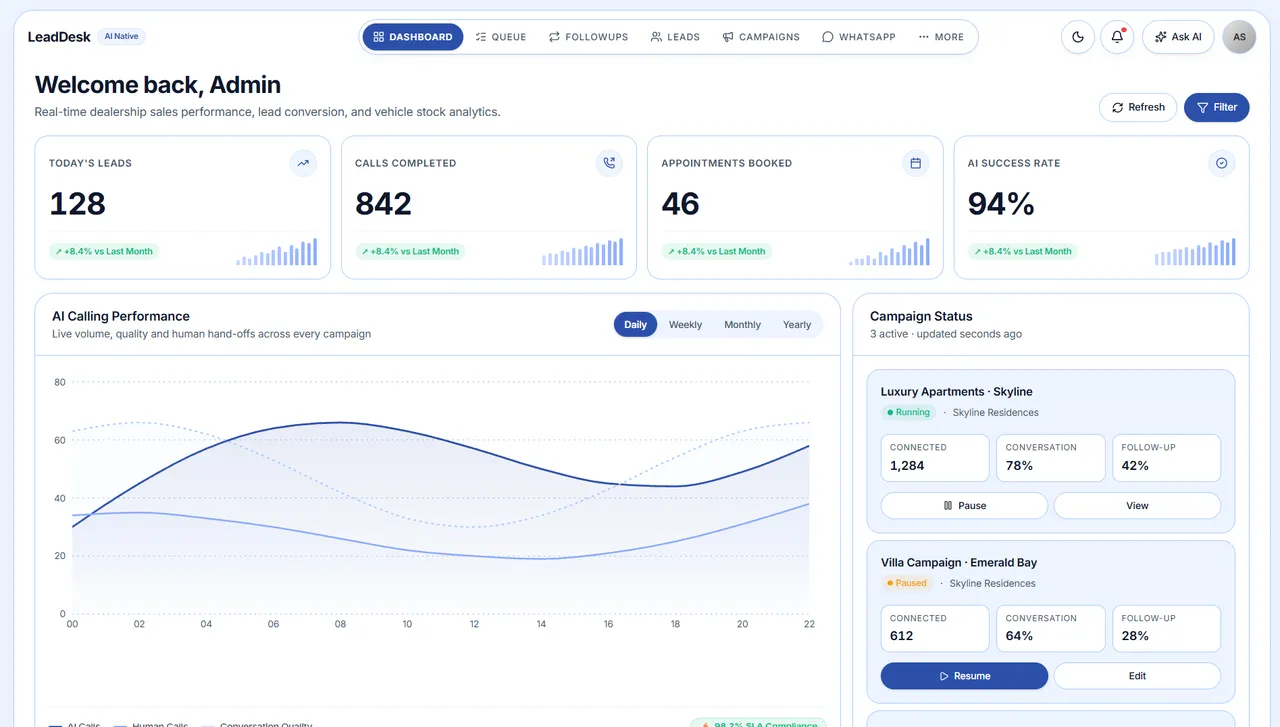
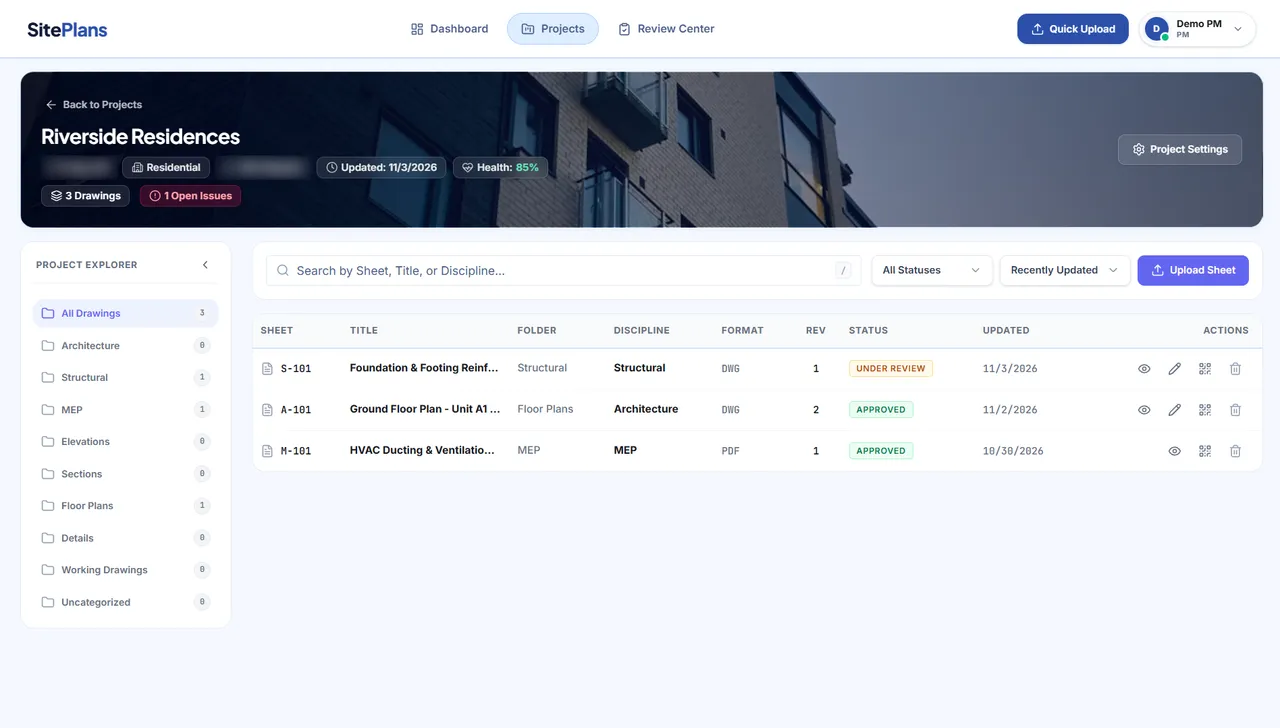
What it looks like in a client project.
Screens from systems we built and run. Details are anonymised.
Capabilities
Enterprise AI agents that carry out the work.
Task autonomy
Agents that plan and carry out tasks using enterprise APIs, within the goal and limits you set.
Cross-system action
Read and write data across CRM, ERP and communication tools, only where you grant access.
Capacity that scales with volume
Take on routine volume without adding manual handling in the same proportion.
What we deliver
Scope is agreed per engagement. These are the components a typical build includes.
- Custom autonomous agent architecture
- API and system integrations
- Agent memory and vector database setup
- Human-in-the-loop oversight dashboard
- Security and guardrail implementation
Integration & implementation
AI agents built into the systems you already run.
We connect through the APIs, webhooks and identity controls you already have, and agree data handling with your team before anything is built.
Your systems
- Salesforce
- SAP
- Jira
- Slack
- Microsoft Teams
- Zendesk
Fortiv layer
- Plans the steps toward a defined goal
- Calls approved APIs and tools
- Pauses for approval before write actions
Low-confidence cases go to a person
What comes back
- Systems of record such as Salesforce, SAP or Jira
- An audit log of every action taken
Systems are examples, not a fixed list.
Human review
Agents can be restricted to read-only access, or required to get human approval before any write action — sending an email, updating a record, moving money. Granular API permissions set exactly what each agent can touch.
Security and data handling
Access follows your existing permissions, actions are logged, and hosting, model providers and data retention are agreed with your security team — we work within your requirements. How we approach security
Industry applications
Where it applies.
Typical applications. Each is scoped against the workflows and systems of the organisation in question.
Software development
QA testing support, code review assistance and Jira ticket management.
Customer success
Agents that work through multi-system billing issues and prepare the resolution.
Financial operations
Invoice reconciliation and payment approvals, with a person approving each payment.
In practice
- AI agents for sales pipeline and deal desk triageInbound deals qualified, routed and logged in the CRM.
- AI agents for support ticket triageTickets classified, answered or escalated with context.
- AI agents for procurement and supplier riskSupplier quotes and risk signals checked before a buyer decides.
Measurement
What we measure.
We record a baseline for each of these before go-live and report against it. We don't quote results before we have seen your workflow and data.
Hours of routine work handled
Time spent on the tasks the agent takes over, compared with the manual baseline.
Completion without escalation
Share of tasks finished without a person stepping in — and why the rest escalated.
Time to pick up a task
How quickly work starts once a request or trigger arrives.
Action auditability
Every action logged with its inputs and reasoning, and reviewed on an agreed cadence.
AI agent development is the work of designing, building and deploying software agents that use a language model to plan and carry out tasks. An agent is given a goal, a set of approved tools and clear limits. It reads from your systems, decides the next step and acts through APIs, pausing for approval where you require it.
Safety is designed in from the start. We use guardrails, granular API permissions and human-in-the-loop checkpoints. An agent can be limited to read-only access, or required to get approval before any write action, such as sending an email, updating a record or moving money. Every action is logged so your team can review it.
Workflow automation follows a predefined path, even when it uses AI to read documents or emails along the way. An AI agent is given a goal and a set of tools, and uses a language model to work out the steps needed to reach that goal. Many projects combine both: a fixed workflow with an agent handling the variable parts.
Yes. Some tasks suit a multi-agent system, where specialised agents — for example a researcher, an analyst and a writer — each handle one part, check each other's output and pass a reviewed result to a person. We only use this pattern when a single agent with good tools would not do the job more simply.
Any system with a usable API. Common examples are Salesforce, SAP, Jira, Zendesk, Slack and Microsoft Teams, along with internal databases and document stores. We connect to what you already run rather than replacing it, and each agent only gets access to the systems and actions its job needs.
Cost depends on the task, the number of systems involved and the level of review you need. We agree scope after a short discovery, then usually start with a pilot on one well-defined task. The pilot is measured against your own baseline, so you can decide on wider rollout with evidence in hand.
Agents & automation
Related solutions
Further reading
- Use case · Food & BeveragesClean-In-Place (CIP) Optimization AI: Sanitation Scheduling & Compliance Records for Food
- Use case · Real EstateAI Lead Qualification for Real Estate: Inbound Leads & Showing Dispatch
- Use case · ManufacturingDynamic AI Production Scheduling & Line Dispatch for Manufacturing
- Business functionAI in Help Desk & Internal IT Support
- Business functionAI in Lead Generation & Prospecting
- Executive guideVoice AI for Customer Acquisition & Support