

Intelligent Document Processing
Intelligent document processing that turns contracts, invoices and forms into checked records.
Intelligent document processing extracts structured, reviewable data from unstructured documents — contracts, invoices, medical records — and delivers it to the systems that need it. Document intelligence with a confidence score on every field.
What a document pipeline connects to
Documents in
- Invoices, contracts, IDs and forms
- Email attachments and scans
The pipeline
- Classifies the document
- Extracts fields with confidence scores
- Routes uncertain fields for review
Records out
- ERP, CRM or database records
- An audit trail for every extracted field
Illustrative. Fields and thresholds are set per document type.
A request arrives
Invoices, contracts, IDs and forms
The AI reads it
Classifies the document
The AI drafts the action
Extracts fields with confidence scores
A person approves
Every extracted field carries a confidence score.
The operational problem
Why manual data entry and legacy OCR fall short
Much of an organisation's operational data sits in unstructured formats — PDFs, emails and scanned images. Traditional OCR struggles with context, complex tables and varied layouts, so the gap is filled by manual data entry.
Where it breaks down
- 01High error rates and costs associated with manual data entry
- 02Traditional OCR failing on complex layouts, tables, and handwriting
- 03Slow processing times delaying downstream business operations
How it works
How a document AI pipeline is built, from taxonomy to connected systems.
- 01
Document taxonomy mapping
Identify document types and the specific data fields requiring extraction.
- 02
Multimodal pipeline setup
Deploy document models capable of spatial and textual reasoning over real layouts.
- 03
Validation and confidence scoring
Score extraction confidence and route edge cases for review.
- 04
System integration
Connect the extraction pipeline directly to target enterprise systems via API.
From the portfolio
What it looks like in a client project.
Screens from systems we built and run. Details are anonymised.
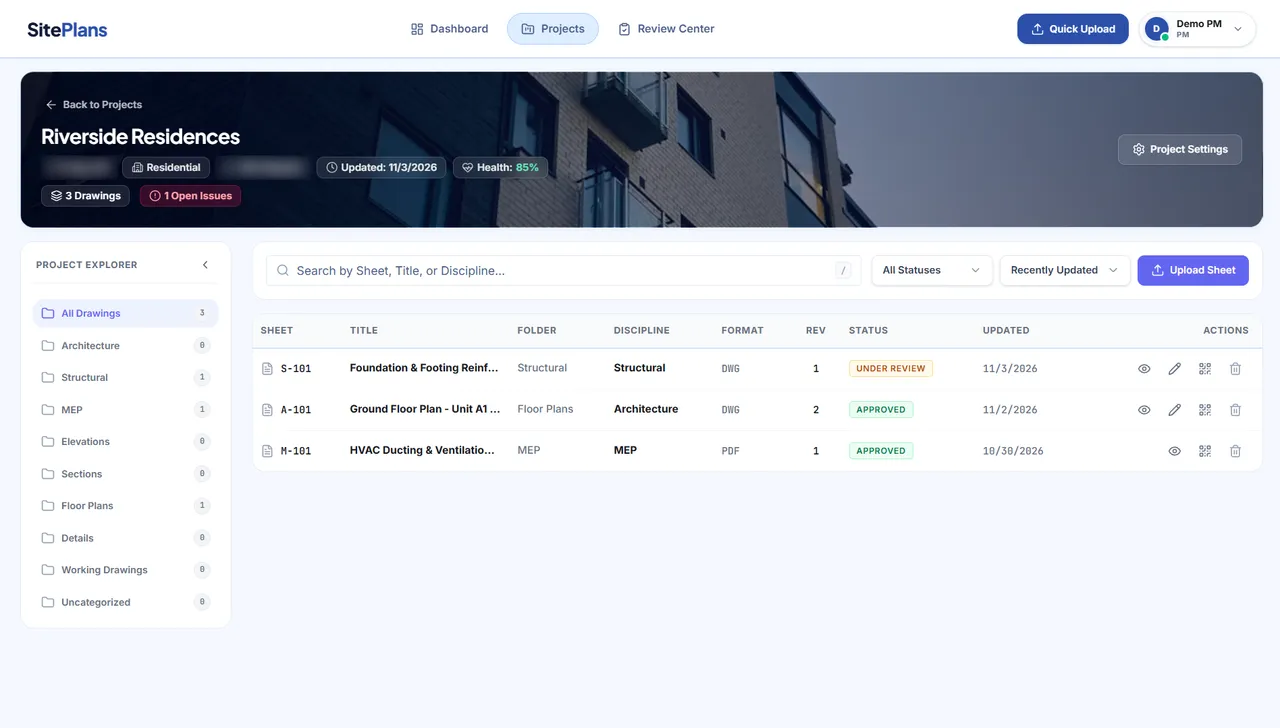
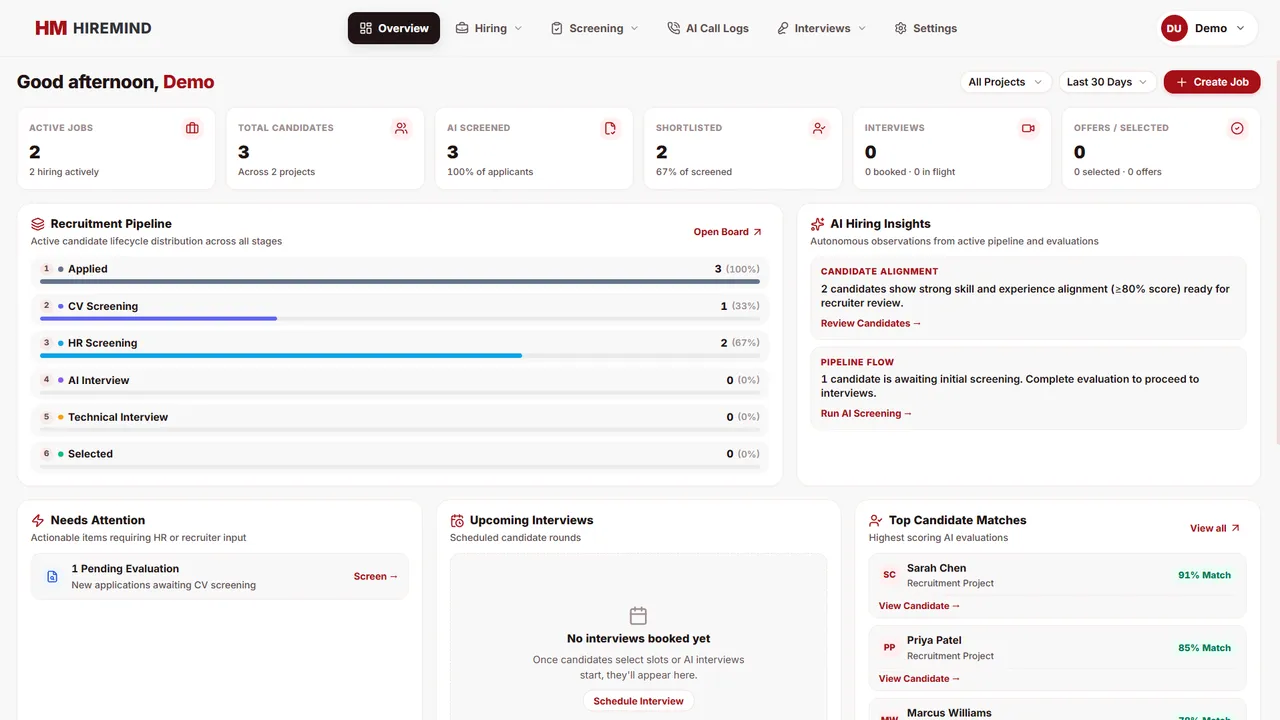
Capabilities
AI document extraction that understands the document.
Layout-aware understanding
Multimodal models read documents for meaning and context, not just the position of text.
Format flexible
Invoices, contracts, IDs and engineering schematics, across varied layouts.
Connected workflows
Extracted data fed directly into your ERP, CRM or downstream databases.
What we deliver
Scope is agreed per engagement. These are the components a typical build includes.
- Custom document processing pipeline
- Layout-aware document parsing
- Confidence scoring and fallback logic
- Human-in-the-loop validation UI
- Database and ERP API connectors
Integration & implementation
Document processing built into the systems you already run.
We connect through the APIs, webhooks and identity controls you already have, and agree data handling with your team before anything is built.
Your systems
- SAP
- Oracle NetSuite
- TallyPrime
- Salesforce
- Microsoft 365 / SharePoint
- Google Workspace
- Snowflake
Fortiv layer
- Classifies the document
- Extracts fields with confidence scores
- Routes uncertain fields for review
Low-confidence cases go to a person
What comes back
- ERP, CRM or database records
- An audit trail for every extracted field
Systems are examples, not a fixed list.
Human review
Every extracted field carries a confidence score. Fields below the threshold you set go to a validation screen, where a reviewer confirms or corrects them before they reach the system of record.
Security and data handling
Access follows your existing permissions, actions are logged, and hosting, model providers and data retention are agreed with your security team — we work within your requirements. How we approach security
Industry applications
Where it applies.
Typical applications. Each is scoped against the workflows and systems of the organisation in question.
Legal & compliance
Contract analysis, clause extraction, and risk redlining for lawyer review.
Industry overview
Financial services
Processing mortgage applications, complex tax forms, and bank statements.
Industry overview
Logistics
Extracting data from bills of lading, customs documents, and shipping manifests.
Measurement
What we measure.
We record a baseline for each of these before go-live and report against it. We don't quote results before we have seen your workflow and data.
Manual entry time
Hours spent keying and checking documents, before and after.
Processing time
From a document arriving to its record being complete.
Field-level accuracy
Measured on a labelled sample of your own documents.
Review rate
Share of fields routed to a person, by document type.
Questions
Intelligent Document Processing: frequently asked questions
Something not covered here? Contact us.
Intelligent document processing (IDP) uses AI to read documents the way a person does: it classifies each document, finds the fields you need, extracts them with a confidence score and checks them against your rules. Clean records go straight to your systems, and uncertain fields go to a reviewer before they are saved.
Standard OCR turns an image into text but does not understand it, so a change of layout can break extraction. Document AI reads for meaning and context. It recognises a total amount, a due date or a termination clause wherever it sits on the page, and handles tables and multi-page documents that template-based OCR struggles with.
Usually. Current multimodal models handle handwriting, tilted scans and low-resolution images far better than legacy OCR. We test on a sample of your own documents first, so you see the real results before committing. Fields with low confidence are routed to a person for review rather than passed through.
Common examples are invoices, purchase orders, contracts and leases, bank statements, tax forms, identity documents, bills of lading and batch records. Each document type gets its own field list and review threshold. Where your documents follow no fixed format, the pipeline is tested on a labelled sample before it goes live.
Pipelines are designed to work within your data-protection obligations. Depending on what your policies allow, we use privately hosted models or enterprise cloud endpoints whose terms exclude your data from model training. We mask or minimise sensitive fields where possible, and keep an audit trail of who reviewed what.
Cost depends on the number of document types, the volume and the systems the records go into. A sample set of your documents is enough to scope it. We usually start with a pilot on one document type, measured for field-level accuracy and review rate against your current manual process.
Data & intelligence
Related solutions
- AI knowledge base & enterprise searchAn AI knowledge base with permission-aware search and answers over your own documents, every answer cited to its source.
- Predictive analytics servicesPredictive analytics services that build forecasting and risk models on your ERP, CRM and operational history, monitored for drift.
- AI executive dashboardsAI executive dashboards that show what your AI systems are doing, what they cost and how they perform against baseline.
- All solutions
Further reading
- Use case · Real EstateAI Lease Abstraction & Commercial Real Estate Portfolio Underwriting
- Use case · Banking & FinanceAI Sanctions & AML Screening for Banking Regulatory Compliance Teams
- Use case · Banking & FinanceAI Commercial Credit Underwriting & Credit Memo Generation for Banks
- Business functionAI in Contract Lifecycle Management (CLM) & Legal Operations
- Business functionAI in Accounts Payable & Invoice Processing
- Executive guideEnterprise Document Intelligence & Automation