
Case study · Manufacturing
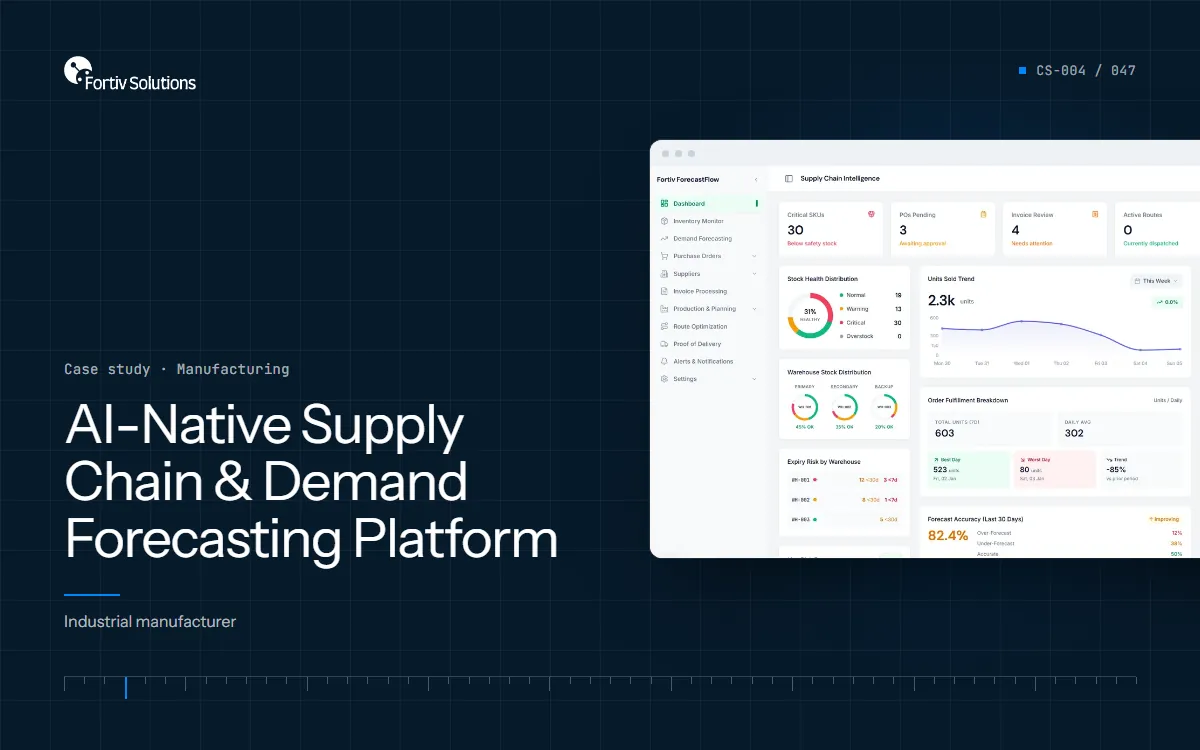
AI-Native Supply Chain & Demand Forecasting Platform
Production plants with central, staging and backup warehouses, a large supplier base and high-volume vendor invoicing.
Engagement record
- Client
- Industrial manufacturer
- Industry
- Manufacturing
- System
- Demand forecasting · Inventory · Procurement
About this write-up
This case study describes the engagement as recorded. The client is not named; figures and outcomes are as reported by the client and have not been independently audited.
The challenge
Material shortages stopped production lines with little warning, safety stock tied up cash, purchase approvals were stuck in email, and duplicate or overpriced invoices slipped through.
Objectives
- Demand forecasting
- Stock across warehouses
- Shortfalls to purchase orders
- Invoice checking
Discovery
We built this supply chain platform for an industrial manufacturer. It forecasts demand, tracks stock and lot expiry across warehouses, works out material shortfalls from the bill of materials and turns them into purchase orders, routes approvals by value, checks every supplier invoice against the order and goods receipt, and scores suppliers on delivery and quality.
What was built
- Demand forecasting. 30- to 180-day forecasts from sales history and seasonality, with accuracy tracked against actuals.
- Stock across warehouses. Stock by warehouse, lot and expiry, with transfer suggestions and alerts before lots expire.
- Shortfalls to purchase orders. Material needs worked out from the bill of materials and production plan, turned into draft POs in one click.
- Invoice checking. Supplier invoices are read automatically and matched against the PO and goods receipt.
- Supplier scorecards. Each supplier rated on on-time delivery, quality, price stability and responsiveness.
- Goods receipt and delivery. Dock checks for quantity and quality, route planning, and proof of delivery from the driver's phone.
Outcomes as reported
Reported summary: 22–32% — lower inventory carrying cost.
| Figure | What it refers to |
|---|---|
| 22–32% | Lower inventory carrying cost |
| 65–80% | Fewer shortage-driven line stoppages |
| 70% | Faster purchase order cycle |
Figures as reported in the engagement record; not independently audited.