
Case study · Healthcare
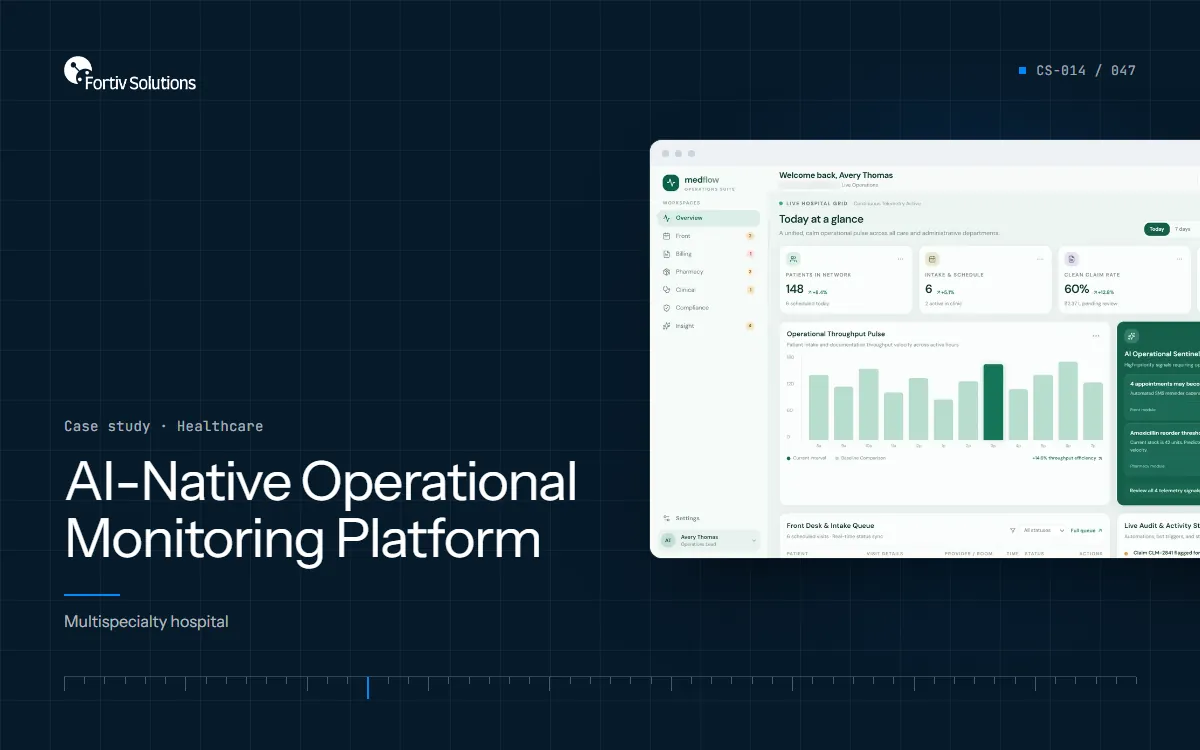
Omni-Channel Voice AI & Automated Clinical Triaging
A multi-specialty regional clinic network whose appointment bookings and patient intake were severely constrained by telephone line congestion.
Engagement record
- Client
- Multi-specialty clinic network
- Industry
- Healthcare
- System
- Voice AI & Clinical Triage
- Timeline
- 8 Weeks
About this write-up
This case study describes the engagement as recorded. The client is not named; figures and outcomes are as reported by the client and have not been independently audited.
The challenge
Patients faced 20+ minute telephone hold times, resulting in a 35% call abandonment rate. After-hours appointment inquiries went to voicemail and were often returned too late. Lack of timely pre-appointment confirmations drove a costly 15% patient no-show rate against clinical staff schedules.
Objectives
- Eliminate extended phone hold times for appointment booking.
- Enable 24/7 self-service scheduling integrated directly with the clinic EHR.
- Implement clinical triage to distinguish urgent symptoms from routine visits.
- Reduce no-show rates through automated multi-channel confirmation sequences.
Discovery
Call-pattern analysis demonstrated that clinical appointment slots were available; patient volume was being lost exclusively at the telephone reception bottleneck.
What was built
- Medical-Grade Voice Agent. Conversational agent handling inbound phone calls 24/7, booking appointments directly via FHIR APIs into the EHR.
- Clinical Triage Logic. Symptom urgency categorization routing acute or sensitive complaints directly to on-duty triage nurses.
- Proactive Outreach. WhatsApp and SMS sequences contacting patients due for periodic check-ups and offering waitlist slots on cancellations.
- Automated Confirmations. Interactive voice, SMS, and email reminders allowing patients to confirm or reschedule in one tap.
Outcomes as reported
Reported summary: +$100K Monthly Revenue from Recovered Capacity.
| Figure | What it refers to |
|---|---|
| 75% Drop | In onboarding latency and patient hold times |
| +45% Bookings | Increase in confirmed appointments booked monthly |
| 15% → <3% | Patient no-show rate reduction |
| +$100K/month | Recovered clinical revenue from optimized appointment utilization |
Figures as reported in the engagement record; not independently audited.
Lessons
- Allowing patients to reschedule with a single SMS tap prevents last-minute clinic cancellations.
- Integrating with EHR calendars in real time eliminates double-booking errors completely.
Next steps
Deploying post-discharge automated follow-up calls to track medication adherence and recover patient recovery metrics.
Implementation questions
All voice processing, transcriptions, and EHR API interactions operate within a dedicated, access-controlled boundary.
The voice engine is trained on diverse dialect models with native multi-lingual support in English, Spanish, and regional languages.
The system immediately detects critical triage keywords, instructs the caller to dial 911, and triggers an urgent warm bridge to clinical staff.
It connects natively with Epic, Cerner, AthenaHealth, NextGen, and eClinicalWorks via standard SMART on FHIR protocols.