
Case study · IT Services
AI-Native Task Management
Software delivery teams running several client projects, sprints and releases in parallel.
Engagement record
- Client
- IT services firm
- Industry
- IT Services
- System
- Task management · Sprint planning · Client reporting
About this write-up
This case study describes the engagement as recorded. The client is not named; figures and outcomes are as reported by the client and have not been independently audited.
The challenge
Project managers spent hours each week updating tickets, chasing status and writing client reports, and slipping deadlines were usually spotted only when it was too late to act.
Objectives
- Tickets from emails and chats
- Early warning on slipping work
- Smarter task assignment
- Meetings to action items
Discovery
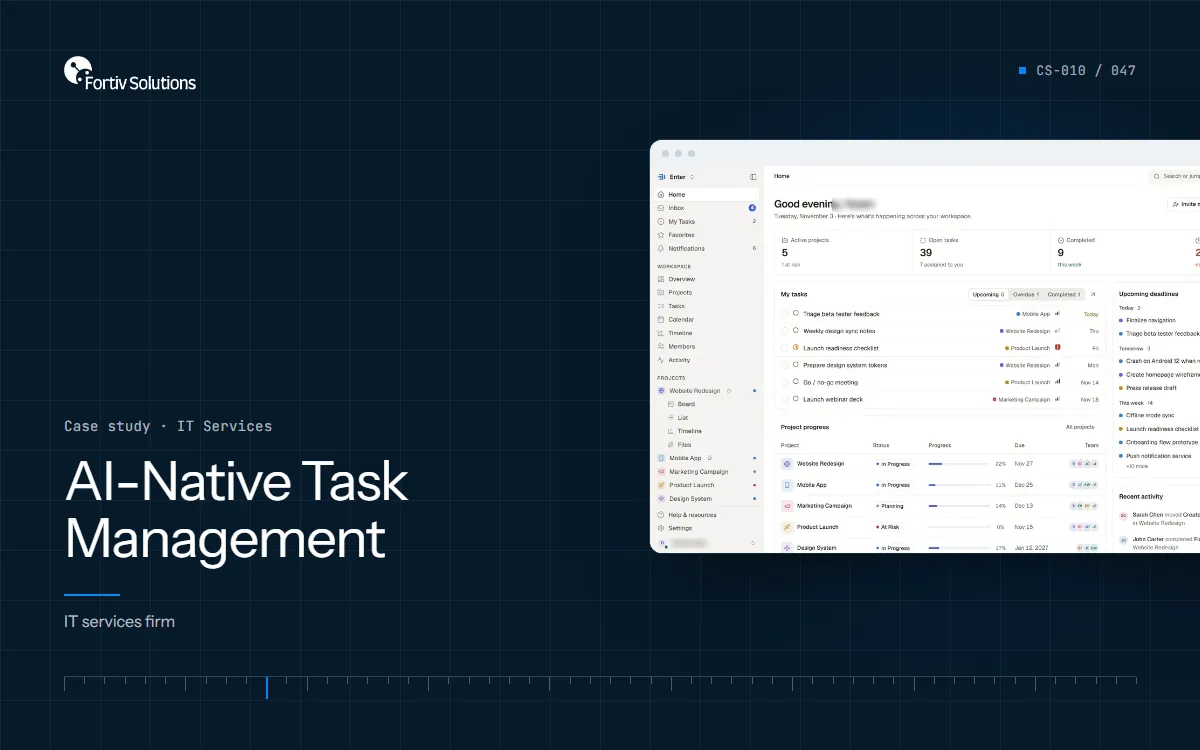
We built this task management platform for an IT services firm running several client projects at once. Teams plan and track work in board, table, timeline and calendar views, while the AI turns client emails and meeting notes into tickets, warns when a deadline is about to slip, suggests who should pick up each task, and writes the weekly client report.
What was built
- Tickets from emails and chats. Client emails, Slack or Teams threads and specs become backlog stories with acceptance criteria.
- Early warning on slipping work. Flags projects likely to miss a deadline from progress, blockers and past patterns — days before it happens.
- Smarter task assignment. Suggests who should pick up each ticket based on skills, past work and current load.
- Meetings to action items. Stand-up recordings or transcripts become subtasks with an owner for each.
- One-click client reports. A client-ready weekly milestone brief, written from the team's actual progress.
- Board, table, timeline and calendar. The same work in Kanban, spreadsheet, Gantt and calendar views, with a Ctrl/Cmd + K command palette.
Outcomes as reported
Reported summary: 25–35% — more billable developer output.
| Figure | What it refers to |
|---|---|
| 25–35% | More billable developer output |
| 3–5 hours | Saved per project manager each week on reporting |
| 60% | Less time on sprint planning (up to) |
Figures as reported in the engagement record; not independently audited.